Digital garden
Garden contents
“So if we cease to cultivate our minds, we won't have the agency to direct them at the right problems, no matter how much "external intelligence" we might have.”
@RuxandraTeslo on X | If we want humans at all to be in charge in any way over the world, we need them to continue exercising their intellect and gaining mastery over intellectual domains. If we deplete the institutional and cultural…
“When people communicate digitally instead of in person, nonverbal indicators of meaning and emotion — through facial expressions, gestures or tone of voice — are lost. Emojis fill in. They also signal in-group belonging, researchers said.”
😭 or 😂: Do Your Emojis Make You Look Old?

Wikipedia | Historical linguistics
“Currently, design is in a dilemma where computational products can be seen as brilliantly designed and engaging to use yet can also be considered very problematic in how they support hidden agendas and often seem less than trustworthy.”
The widening rift between aesthetics and ethics in the design of computational things
“Convenience has the ability to make other options unthinkable.”
The Tyranny of Convenience
“We are at the start of the reckoning for an era in which innovation was less often done for ordinary Americans and more often done to them. People are rightly asking: What, and who, is technological progress for? The A.I. labs need an answer, fast.”
Big Tech Fooled America Once. The Second Time’s Not Going So Well
“AI is grown more than designed”
An Alien Mind
“the design of interactive systems is, at its heart, a communicative process”
Lingua Francas for Design: Sacred Places and Pattern Languages
“The fundamental premise of this paper is that the design of interactive systems is, at its heart, a communicative process. Successful design requires communication-presentation, discussion, disagreement, negotiation, compromise, and so on-among a diverse array of people.”
Lingua Francas for Design: Sacred Places and Pattern Languages
“design is not just about making things. Design is a social, collaborative activity.”
Design as Storytelling
“LLMs are most useful—and their harms most contained—when they complement the other parts of someone’s life, instead of acting as a substitute.”
How to Speak to a Computer
“When we interact with an LLM, we instinctively apply the same expectations that we have for humans: If an LLM offers us incorrect information, or makes something up because it the correct information is unavailable, it is lying to us If it quotes a source that doesn’t exist, it is making things up If the LLM continues to offer incorrect information, even when we confront it, it’s doubling down The problem, of course, is that it’s a little incoherent to accuse an LLM of lying. It’s not a person. People can be expected to exhibit integrity. People have, in most situations, an ethical obligation to tell the truth. If they don’t, you can’t trust them.”
How to Speak to a Computer
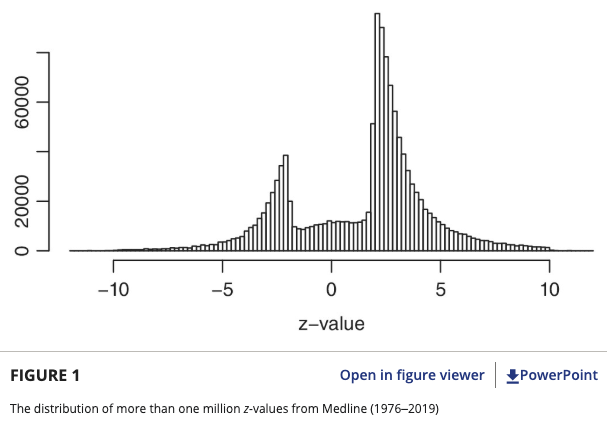
The significance filter, the winner's curse and the need to shrink
“Serif typography carries a different set of associations. It borrows authority from literature, academia, journalism, and publishing. It implies that the company has considered the philosophical consequences of what it is building. Muted colors suggest restraint. Grainy landscapes and botanical details suggest that the company has a soul and possibly reads books.”
@YifeiChen1121 on X | AI slop can look tasteful

The Tastemakers, 2026 - varnelis.net
“Virtually everything that is man-made has been subject to a design process involving deliberate choices and decisions”
Design for Living — R / D
“Human beings consciously and above all unconsciously lean on architecture to assuage and reassure their own memory for architecture is the most tangible sign-post between their terrestrial existence and that of their ancestors.”
The Limits of Memory: For a Critical Architecture — R / D
“I’ve been thinking about the weavers a lot lately. History remembers the Luddites—the weavers who smashed machines in protest from 1811 to 1816. They weren’t stupid. They were highly skilled artisans who understood exactly what was being taken from them. They just didn’t have an answer for it. But the weavers who succeeded took a different path. In Yorkshire, groups of weavers formed cooperative mills, bringing their cloth to be finished by machines while preserving the quality judgments only they could make. They didn’t resist the loom. They figured out what skill they still had that the loom didn’t.”
The Paradox of the AI Designer :: UXmatters
“There is a distinction between raw material and finished product or artifact. A craft is always exercised upon something, and aims at the transformation of this into something different. That upon which it works begins as raw material and ends as finished product. The raw material is found ready made before the special work of the craft begins.”
The Meaning of Craft — R / D
“The craftsman knows what he wants to make before he makes it. This foreknowledge is absolutely indispensable to craft: if something, for example stainless steel, is made without such foreknowledge, the making of it is not a case of craft but an accident. Moreover, this foreknowledge is not vague but precise. If a person sets out to make a table, but conceives the table only vaguely, as somewhere between two by four feet and three by six, and between two and three feet high, and so forth, he is no craftsman.”
The Meaning of Craft — R / D
“As a concept, design implies a humility that seems absent from the word “construction” or “building”. Because of its historical roots as a mere addition to the “real” practicality, sturdy materiality and functions of daily objects, there is always some modesty in claiming to design something anew. In design there is nothing foundational. It seems to me that to say you plan to design something, does not carry the same risk of hubris as saying one is going to build something.”
A Cautious Prometheus? — R / D
“I wonder why progress looks so much like destruction.”
Travels with Charley in Search of America: Steinbeck, John: 9780140053203: Amazon.com: Books
“What good is the warmth of summer, without the cold of winter to give it sweetness.”
Travels with Charley in Search of America: Steinbeck, John: 9780140053203: Amazon.com: Books